TAMISEE: a cross-border dark ecological network
At night, the regions of northern France and Belgium are easily recognisable from space due to the massive use of lighting. Yet it is this lighting that has harmful effects on many species, including human beings. The vital needs of many species are intrinsically linked to darkness, and the living world has always functioned according to a day-night rhythm. Bats, birds of prey, insects and amphibians need the night to live, feed, reproduce and move around. In order to give the night back its precious darkness, several Belgian and French partners have joined forces around a shared project: TAMISEE.
TAMISEE (Territoire Avec Moins d’Illuminations, par Souci Écologique et Énergétique, i.e. ‘Area with less lighting for ecological and energy reasons’) is an INTERREG France-Wallonie-Vlaanderen project run by 34 partners on both sides of the border. The project partners funded by the programme are: Parc national de l’Entre-Sambre-et-Meuse, Parc naturel Viroin-Hermeton, Parc naturel régional des Ardennes, Parc naturel de Gaume, Parc naturel de l’Ardenne méridionale, Cercle des Naturalistes et Astronomes amateurs de la Botte du Hainaut, Virelles Nature, Espace environnement, RenARd, Institut national de recherche pour l’agriculture, l’alimentation et l’environnement (INRAE) and the Fédération Départementale d’Énergies des Ardennes.
Twenty-three associated partners complement this core group, contributing their skills and expertise according to the activities.
These partners share a common goal: the protection and restoration of the night by putting in place coordinated management of artificial lighting.
A nocturnal sky of high quality
Because nocturnal animals do not stop at borders, the TAMISEE project aims to restore the night by (re)connecting dark areas across borders, while taking into account the importance of human uses. The partners involved in the TAMISEE project aim to co-build a common framework for commitment in order to harmonise the actions implemented, make them more effective and inspire neighbouring territories.
Reducing light pollution
30% of vertebrates and 60% of invertebrates are active at night or at twilight. When artificial light disrupts the alternation of day and night, all biodiversity pays a heavy price. Today, researchers, astronomers and health professionals agree on the harmful effects of light pollution on both wildlife and humans. Preserving the night means protecting ecosystems and giving life a chance.
Our latest news
No Results Found
The page you requested could not be found. Try refining your search, or use the navigation above to locate the post.
our upcoming events
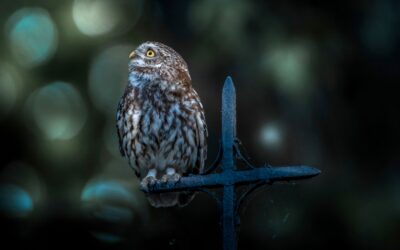
Rediscover the Night: Launch Event
On 6 October, come along to the Domaine Saint-Roch for the launch of TAMISÉE, an Interreg project focusing on light pollution and the quality of our...